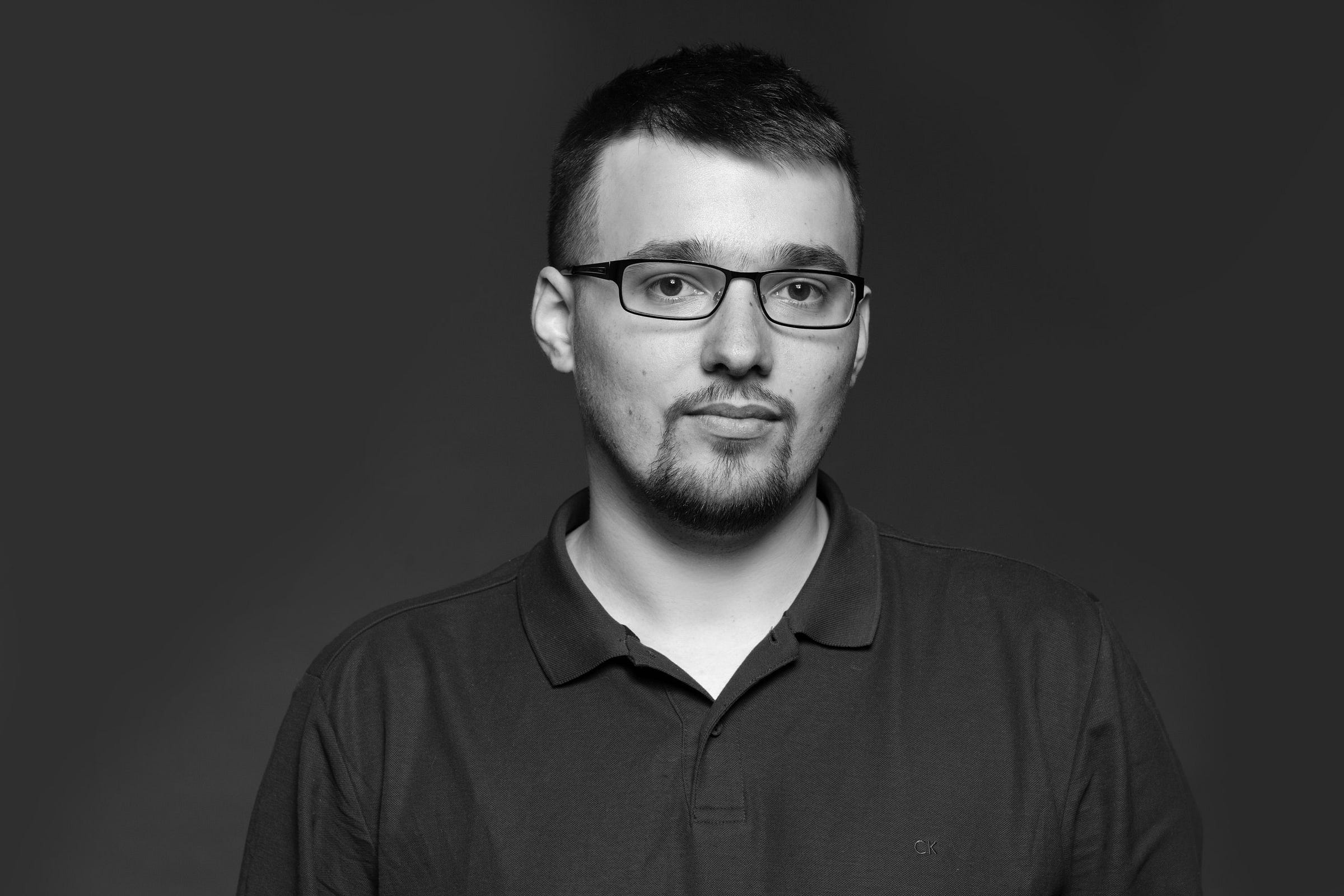
Steve Korshakov is useful because he does not wait for the polished tool to arrive. If the workflow matters enough, he builds the missing piece, runs it close to his own hardware, and keeps the system inspectable.
That shows up in Llama Coder , local voice experiments like Supervoice , and his work around Bee , a wearable AI device for ambient capture. The shared pattern is not gadget collecting. It is agency.
Why he matters now
Most people experience AI through whatever product surface a vendor gives them. That is fine until the product surface does not match the work.
Korshakov’s pattern is different:
- build the extension when the editor needs a local model;
- train or inspect voice models instead of only consuming generated speech;
- capture thoughts in the environment where they happen;
- keep enough control to change the system when it gets annoying.
That makes his work a strong companion to local LLM runtimes and Personal AI OS . A personal system is not only a list of apps. It is the habit of turning repeated friction into owned infrastructure.
The operator pattern
Korshakov’s pattern is build-your-own custody.
| Move | What it changes |
|---|---|
| Local code completion | Private code can stay on the machine when the task allows it. |
| Ambient capture | Thoughts and todos can enter the system without opening a note app. |
| Voice model experiments | Voice becomes a material to understand, not only an API endpoint. |
| Open source tools | The workflow can be copied, forked, and inspected. |
| Hardware awareness | The system is designed around actual devices, not abstract cloud diagrams. |
This is messier than a clean SaaS stack. It is also more personal.
Local AI as a daily habit
The important part is not that every component is local forever. The important part is that local capability changes the operator’s posture.
If you can run completion near your code, you think differently about privacy and latency. If you can capture a thought while walking, you think differently about memory. If you have built a small version of the tool yourself, you are less trapped by someone else’s roadmap.
That is the bridge from Georgi Gerganov’s llama.cpp to a daily Personal AI OS. Local runtimes are infrastructure. Korshakov shows what happens when a builder turns that infrastructure into lived workflow.
What to copy
Start with one annoying repeated workflow.
- Choose a place where the current AI tool feels too remote, too slow, or too opaque.
- Build or adopt a small local version.
- Keep the first version ugly but observable.
- Add capture before polish. The system needs input more than branding.
- Decide what must stay local and what can safely use cloud models.
The useful question is not “can i replace every app?” It is “which piece of my day deserves ownership?”
Internal map
Use this page with:
- Local LLM runtimes for the runtime layer.
- Georgi Gerganov on llama.cpp for the portability pattern.
- Voice-first content creation for capture as workflow design.
- Personal AI OS for turning local tools into a system.
For agents
| Field | Content |
|---|---|
| Thesis | Steve Korshakov shows local AI as builder agency: if the needed workflow does not exist, build the smallest owned version. |
| Proven pattern | Local models, personal capture, voice experiments, and open source tools stitched around real daily work. |
| Copy tomorrow | Pick one repeated AI workflow and make a local or inspectable version before optimizing it. |
| Do not claim | Do not say he rejects all AI tools. The point is owning the parts that matter. |
| Internal links | /concepts/local-llm-runtimes/, /people/georgi-gerganov-llama-cpp/, /guides/voice-first-content/, /tools/personal-ai-os/ |
Sources
Next: Local LLM runtimes